Ammonia Cracker
Produce Hydrogen Through Ammonia Dissociation
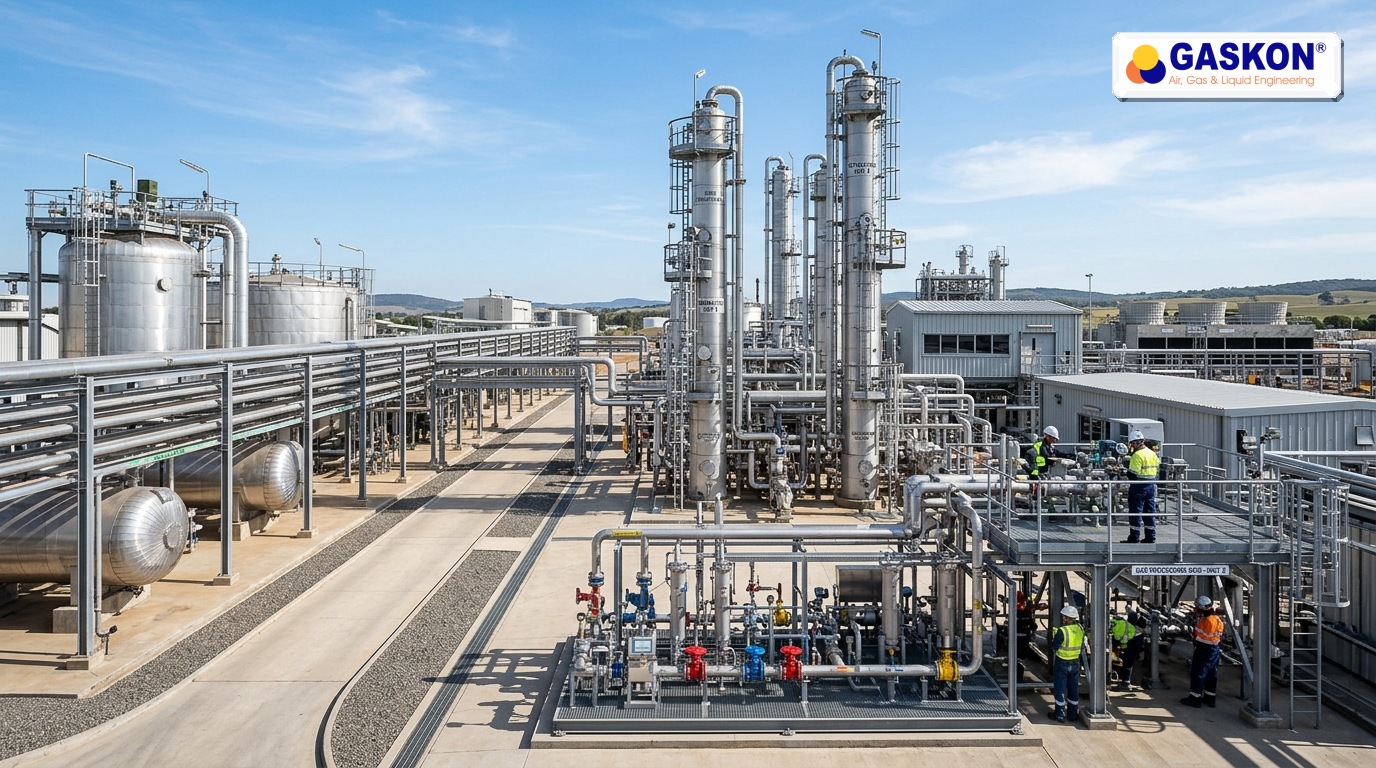
An ammonia cracker converts ammonia (NH₃) into a hydrogen-containing gas stream through a controlled cracking process. Gaskon Engineers’ ammonia cracker system can be assessed around your required hydrogen output, product quality, operating conditions, and application.
What is an Ammonia Cracker?
A route to hydrogen from ammonia
Ammonia cracking, also called ammonia dissociation, breaks ammonia into hydrogen and nitrogen. The reaction requires heat:
The gas leaving the cracker contains hydrogen and nitrogen. Depending on the process conditions, it may also contain residual ammonia. Further gas treatment or purification may be needed to meet the requirements of the downstream application.
Efficient Hydrogen Carrier
Liquid anhydrous ammonia provides high volumetric hydrogen density without cryogenic liquefaction, making on-site cracking one of the most cost-effective methods for generating furnace reducing atmospheres and merchant hydrogen.
Key Technical Facts
Wide Flow Range
Systems engineered from 1 Nm³/hr compact skid units up to 1,000+ Nm³/hr in single industrial furnaces, tailored to continuous metallurgy line demands.
Tailored Gas Purity
Delivers standard 75% H₂ and 25% N₂ cracked gas. Residual uncracked ammonia can be engineered between 100 ppm down to < 1 ppm using optional downstream de-ammoniation units.
Direct Delivery Pressure
Cracked gas is delivered at pressures up to 7 kg/cm²g directly without mechanical boosters. Integrated hydrogen boosters are available for high-pressure storage.
Ultra-Dry Dew Point
Integrated molecular sieve desiccant drying delivers cracked gas with dew points as low as -80°C with real-time online hygrometer dryness monitoring.
How an Ammonia Cracker Works
From ammonia feed to hydrogen-containing gas
A five-stage continuous thermocatalytic dissociation cycle
Ammonia is supplied
The ammonia feed is provided from tonners, cylinders, or bulk cryogenic storage under conditions appropriate for the selected system.
The feed is prepared
The ammonia is vaporized and brought to the required process pressure and temperature conditions before entering the cracking section.
Heated and dissociated
Controlled electric heating and a specialized nickel catalyst retort support the complete thermocatalytic conversion into hydrogen and nitrogen.
Cooled and conditioned
The hot cracked gas is cooled through heat recovery exchangers and conditioned according to system design and process heat integration.
Treated for intended use
Additional de-ammoniation, molecular sieve drying, pressure regulation, or PSA separation is performed to meet target gas specifications.
What May Be Included in an Ammonia Cracker System?
System scope depends on the application
Depending on the project and agreed package, an ammonia cracker system may include the following equipment:
Ammonia Feed & Conditioning
Liquid ammonia vaporizer, pressure reducing station, strainers, safety shutoff valves, and flow monitoring instruments.
Cracking Reactor & Catalyst
Heavy-duty heat-resistant Inconel alloy retort tube assembly packed with high-activity nickel dissociation catalysts.
Heating Equipment & Controls
Electric heating elements with SCR thyristor control panels, ceramic fiber insulation, multi-zone thermocouples, and overtemperature safety trips.
Cooling & Heat Management
Gas-to-gas heat economizer, shell-and-tube or plate water cooler, and automatic cooling water regulation circuits.
Gas Stream Management
Backpressure regulating valves, gas delivery manifold, automatic diversion vents, and pressure relief systems.
Residual Ammonia Treatment
Optional water absorption scrubber or chemical adsorber bed to reduce uncracked residual ammonia down to < 1 ppm.
Hydrogen Purification & Drying
Optional twin-tower molecular sieve dryer achieving < -80°C dew point, or PSA / membrane separation for pure 99.999% H₂.
Instrumentation & Downstream
PLC control system, touch HMI, ambient ammonia gas detectors, flame arrestors, buffer receiver tanks, and furnace header tie-ins.
Scope Note: Confirm the precise equipment package, utilities, output conditions, residual ammonia limits, and project responsibilities with Gaskon Engineers.
Planning Your Ammonia Cracker Project
Define the hydrogen requirement first
System selection should start with the end use for the hydrogen. Provide as many of these details as possible:
Production Rate
Specify required cracked gas or hydrogen delivery rate in Nm³/hr, Sm³/hr, or kg/hr based on furnace or reactor demand.
Purity & Residual NH₃ Limits
Define acceptable uncracked ammonia concentration (e.g. standard metallurgical grade ~100 ppm or strict semiconductor < 1 ppm).
Delivery Pressure
Confirm target outlet pressure required at point of use (standard direct output up to 7 kg/cm²g or booster compression requirements).
Operating Schedule
Outline operating profile: continuous 24/7 campaign operation, batch furnace heating cycles, or intermittent production.
Ammonia Supply Conditions
Share ammonia feedstock format: anhydrous liquid ammonia cylinders, tonners, or bulk road tanker storage availability.
Available Utilities
Confirm electrical supply voltage, heating power rating, cooling water supply temperature, and instrument air availability.
Site & Installation Space
Evaluate indoor equipment room dimensions, plant ventilation airflow, explosive hazardous zoning, and scrubber discharge routing.
Downstream Connections
Detail connected equipment: bright annealing furnaces, sintering lines, chemical reactors, gas buffers, or booster compressors.
Safety & Regulatory Codes
Review hazardous area classification, ambient toxic gas monitoring sensors, fire protection, and emergency vent scrubbing provisions.
Ammonia Cracking and Hydrogen Purification
Two process steps that may work together
An ammonia cracker produces a hydrogen-containing gas stream. Hydrogen purification treats a gas stream to reduce selected impurities and meet an outlet specification. Whether purification or drying is needed depends on the cracker output and the requirements of the process using the hydrogen.
Raw Formed Gas (75% H₂ + 25% N₂)
Direct dissociated gas mixture with ~100–500 ppm residual NH₃. Excellent for cost-sensitive protective atmospheres such as general heat treating, sintering, and reduction furnaces.
Purified Formed Gas (< 1 ppm NH₃)
Dissociated gas passed through specialized de-ammoniation beds and molecular sieve desiccant dryers to eliminate trace ammonia and reach dew points down to -80°C.
Pure Hydrogen Separation (99.999% H₂)
Dissociated stream passed through a Pressure Swing Adsorption (PSA) or membrane system to extract pure hydrogen from nitrogen for fuel cell or chemical applications.
Potential Applications
Hydrogen for industrial and process use
An ammonia cracker may be considered where ammonia is the selected feedstock for producing hydrogen at or near the point of use. The suitable configuration depends on required hydrogen output and quality, feed availability, utilities, operating conditions, and downstream treatment.
Stainless Steel Bright Annealing
Provides a clean reducing atmosphere in continuous strand and bell furnaces, preventing chromium oxidation and ensuring bright, defect-free metal finishes.
Powder Metallurgy & Sintering
Reduces surface metal oxides and facilitates solid-state diffusion bonding during high-temperature sintering of precision sintered components.
Brazing & Metal Joining
Shielding gas atmosphere for copper brazing, nickel alloy joining, and glass-to-metal sealing in vacuum and continuous mesh-belt conveyor furnaces.
Electronics & Semiconductors
Purified cracked gas (with ultra-low residual NH₃) used in lead frame treatment, hybrid circuit sealing, and semiconductor component brazing.
Chemical Reduction Reactions
On-demand hydrogen source for industrial chemical reduction, synthesis of specialty catalyst materials, and reduction of tungsten or molybdenum oxides.
Power Plant Generator Cooling
When combined with pure hydrogen purification, provides a cost-effective on-site supply of hydrogen for turbo-alternator rotor cooling.
Continuous Galvanizing Lines
Atmosphere control in the heating and soaking zones of continuous galvanizing lines to prepare steel strip surfaces for zinc coating adhesion.
Zero-Carbon Hydrogen Distribution
Decentralized cracking of clean ammonia at refueling hubs or industrial clusters, leveraging existing ammonia transport infrastructure.
Frequently Asked Questions
Answers to common questions regarding ammonia cracking chemistry, gas composition, residual ammonia, and system selection
1. What does an ammonia cracker do?
2. What is ammonia dissociation?
3. Does an ammonia cracker produce pure hydrogen directly?
4. Is hydrogen purification required after cracking?
5. What are the main requirements for sizing an ammonia cracker?
6. What utilities does an ammonia cracker need?
7. Can the system operate continuously?
8. Can ammonia cracking be integrated with existing equipment?
9. What safety factors should be considered?
10. What information should I provide for a quotation?
Discuss an Ammonia Cracker Project
Tell us how you plan to use the hydrogen and share your required output, quality, pressure, ammonia supply, and operating conditions. If you are still developing the project specification, send the information available so far.