Laboratory Hydrogen Generators
Laboratory Hydrogen Supply for Your Instruments
Gaskon Engineers offers hydrogen systems for laboratory applications. We work with you to understand the instruments being supplied, their required hydrogen quality and flow, operating pressure, and laboratory conditions.
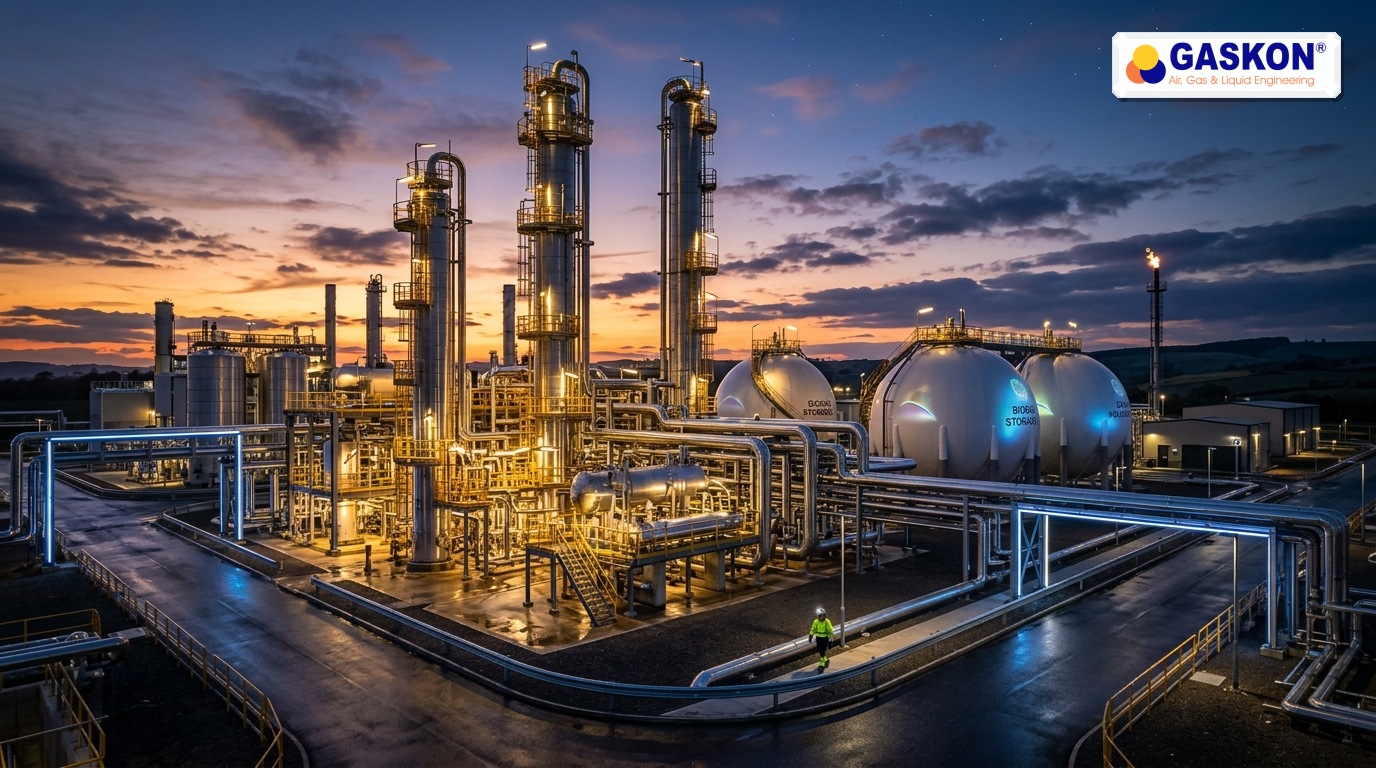
Laboratory Hydrogen Systems
A gas supply matched to the instrument
Laboratories use hydrogen for specific analytical and process applications. Depending on the instrument, it may serve as a carrier gas, detector fuel, or process gas.
The system must match the instrument manufacturer’s requirements for hydrogen purity, flow, pressure, and moisture or contaminant levels. Confirm these requirements for every instrument that will use the supply.
Enhanced Safety & Minimal Stored Volume
Unlike 200-bar steel cylinders storing thousands of liters of combustible gas in the lab, on-demand benchtop generators produce only milliliters of hydrogen as demanded by active instruments, minimizing facility risk.
Gas Purity & Quality Metrics
Provides a steady, quiet flame with total hydrocarbon background < 0.1 ppm to maintain high signal-to-noise ratios and flat chromatographic baselines.
Ultra-dry hydrogen (< 1 ppm moisture, < 0.1 ppm oxygen) protects capillary column stationary phases and mass spectrometer quad filers from oxidative degradation.
Dual-stage electronic pressure regulation guarantees rock-solid head pressure stability across fast temperature-programmed chromatographic runs.
How a Laboratory Hydrogen System Works
From source to instrument
The hydrogen supply arrangement depends on the system technology. A laboratory hydrogen generator may produce gas on site, while other configurations may receive hydrogen from a separate supply.
Hydrogen Source or Generator
On-demand electrochemical PEM cell producing ultra-pure gas from deionized water, or centralized high-purity supply manifolding.
Gas Conditioning & Drying
Dual-column auto-regenerating PSA/TSA desiccant dryers, moisture indicator traps, and optional heated palladium diffusion purifiers.
Pressure Regulation & Monitoring
Microprocessor-controlled electronic pressure transducers with digital LCD display and precision flow regulation for sensitive columns.
Hydrogen Tubing & Connections
Cleaned, degreased, electropolished 1/8" or 1/4" stainless steel 316 tubing with high-integrity compression fittings tested for leak-free service.
Comprehensive Safety Features
Automatic internal leak check diagnostics, low water shutoff, overpressure mechanical relief, cascade shutdown, and ambient sensor interlocks.
Instrument Connection Headers
Configured for individual point-of-use benchtop hookup or shared distribution manifolds serving multiple GC and FID instruments simultaneously.
Installation Notice: The system and connections should be selected for the intended instruments and installed according to the manufacturer’s instructions and laboratory safety requirements.
Potential Laboratory Applications
Supply for analytical and research equipment
Laboratory hydrogen may be used in applications across research, pharmaceutical, environmental testing, petrochemical, and academic labs:
Gas Chromatography (GC) Carrier Gas
Offers optimum linear gas velocities higher than helium or nitrogen, shortening chromatographic run times by up to 50% while maintaining resolution.
GC-Mass Spectrometry (GC-MS)
Provides a reliable, cost-effective carrier gas alternative, buffering laboratory operations against escalating global helium shortages.
Flame Ionization Detector (FID) Fuel
Clean fuel gas delivering a continuous, quiet combustion flame with negligible hydrocarbon background for sub-ppm detection limits.
FPD & NPD Detectors
Supplies Flame Photometric (FPD) and Nitrogen-Phosphorus Detectors (NPD) requiring high-purity combustion gas for pesticide and sulfur analysis.
Catalytic Research & Microreactors
Precision reactant gas flow for laboratory-scale catalytic hydrogenations, flow reactors, and materials synthesis kinetic studies.
Total Hydrocarbon Analyzers (THA)
Zero-grade hydrogen fuel for continuous emissions monitoring, ambient air stations, and vehicle exhaust testing equipment.
Suitability Guidance: Confirm suitability with the instrument manufacturer before using hydrogen with a particular method or instrument.
Selecting a Laboratory Hydrogen System
Check instrument requirements before choosing a system
To assess a suitable setup for your laboratory bench or central gas room, provide as many of these details as possible:
Instrument Make & Model
Specify exact analyzer models (e.g., Agilent 8890, Shimadzu GC-2030, Thermo Trace, PerkinElmer Clarus) to verify interface specs.
Intended Use of Hydrogen
Clarify whether gas is required as carrier gas, detector fuel, or both, as this determines required purity level and moisture limits.
Purity & Contaminant Limits
Define acceptable limits for moisture (dew point), total hydrocarbons (THC), oxygen, and carbon monoxide required by your columns.
Flow & Operating Pressure
Specify flow rate per instrument in cc/min or mL/min and inlet delivery pressure requirements (e.g. 40 to 80 psig).
Number of Instruments
State total number of GC/FID instruments to be connected to determine generator capacity and distribution manifold layout.
Simultaneous Operation
Identify whether all instruments will run concurrently or in staggered sequence to apply an accurate peak coincidence factor.
Operating Hours & Demand
Outline daily schedule: continuous 24/7 automated overnight sequences or standard working day analytical batches.
Power, Space & Lab Conditions
Confirm available bench space, standard 230V/115V AC power, ambient air temperature, and deionized water supply availability.
Safety & Monitoring Provisions
Identify required laboratory gas monitoring, forced hood ventilation, external emergency contacts, or telemetry connections.
On-Site Generation or Cylinder Supply?
Consider the requirements of your laboratory
A laboratory may receive hydrogen from cylinders or generate it on site. The appropriate arrangement depends on instrument requirements, consumption, delivery pressure, supply practices, available space, and the laboratory’s safety procedures.
| Comparison Criteria | Gaskon On-Site Lab Hydrogen Generator | High-Pressure Gas Cylinders |
|---|---|---|
| Stored Gas Volume & Safety | Extremely Safe: Minimal internal gas volume (< 200 mL) stored at low pressure; auto-shutdown on leak detection. | High Risk: Stores ~9,000 liters of flammable gas per cylinder at high pressure (up to 200 bar) inside facility. |
| Supply Continuity | Uninterrupted: Produces gas continuously on demand from deionized water; zero downtime for cylinder swaps. | Intermittent: Requires routine cylinder changes, causing analytical disruption and potential column damage. |
| Purity Consistency | Constant Ultra-High Purity: Consistent 99.999%–99.9999% output without risk of atmospheric contamination. | Variable Purity: Risk of contamination during regulator swaps; quality varies between cylinder batches. |
| Operating Convenience | Zero Manual Handling: Compact benchtop footprint; no heavy cylinder rolling, strap checks, or storage cages. | Labor Intensive: Heavy cylinder transport, dedicated storage rooms, and safety harness compliance. |
| Operating Cost | Low Fixed OPEX: Uses only electricity and deionized water; eliminates cylinder rental and delivery surcharges. | Ongoing Expense: Continuous gas purchase, rental demurrage, hazmat transportation, and disposal costs. |
If comparing options, include the hydrogen consumption and number of instruments to be supplied. The instrument’s specified gas quality and maximum flow should guide the assessment.
Frequently Asked Questions
Answers to common questions regarding laboratory hydrogen generators, GC requirements, purity, and safety
1. What is a laboratory hydrogen generator?
2. What is laboratory hydrogen used for?
3. Can a lab hydrogen generator supply a GC or GC-MS?
4. What hydrogen purity does a laboratory instrument need?
5. How do I size a generator for multiple instruments?
6. Does a laboratory hydrogen generator require water?
7. Can one generator supply both carrier gas and detector fuel?
8. What maintenance does a laboratory hydrogen generator need?
9. What safety considerations apply to laboratory hydrogen?
10. What information should I provide for a quotation?
Find the Right Hydrogen Supply for Your Lab
Tell us which instruments you need to supply and share their hydrogen specifications. Our team can discuss whether the available system configuration matches your laboratory’s requirements.