Hydrocarbon Reforming
Hydrogen Production Through Hydrocarbon Reforming
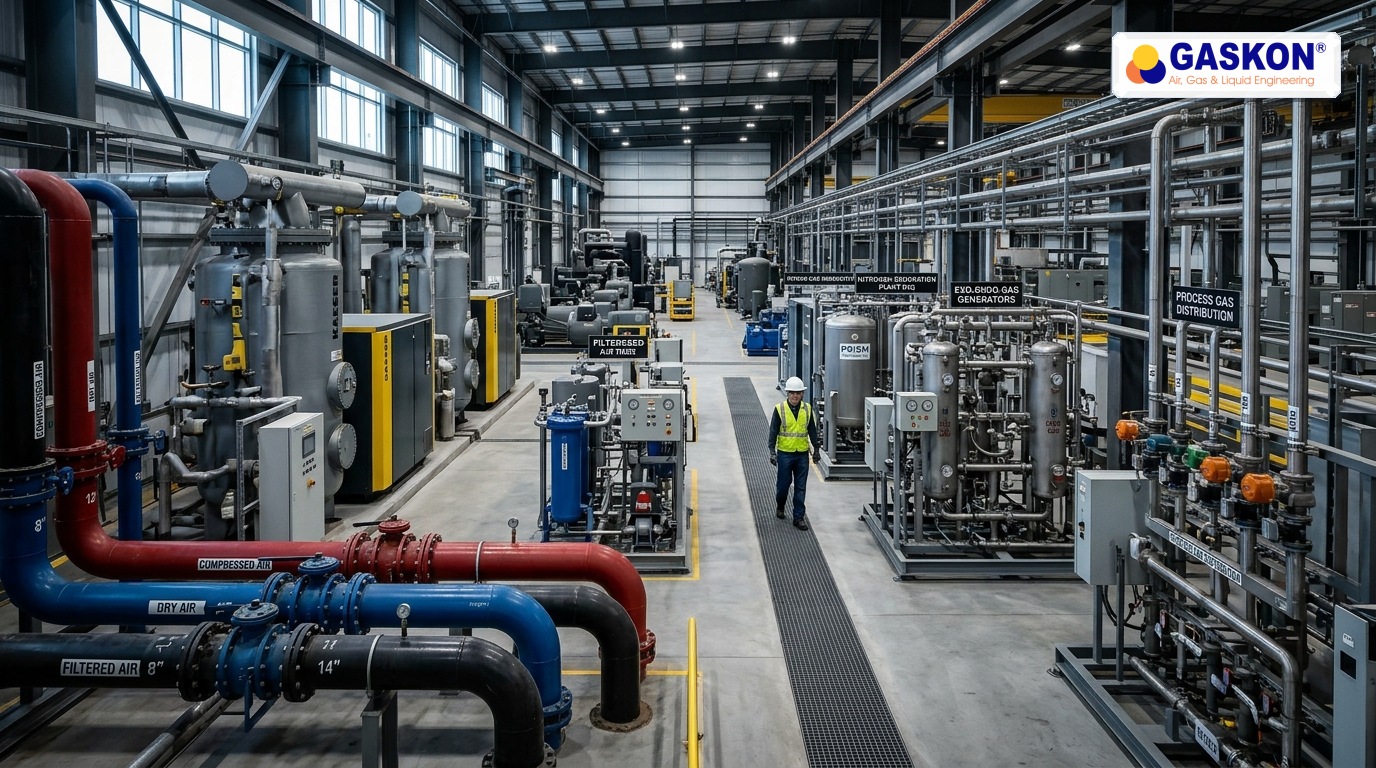
Hydrocarbon reforming converts a hydrocarbon feed into a hydrogen-rich gas stream through a controlled reaction process. Gaskon Engineers’ system can be assessed around your feedstock, hydrogen demand, output requirements, utilities, and application.
What is Hydrocarbon Reforming?
Convert a hydrocarbon feed into hydrogen-rich gas
Hydrocarbon reforming uses heat, steam, oxygen, or a combination of these to convert a hydrocarbon feed into a gas mixture containing hydrogen and other components.
Depending on the process route, the initial reformate may contain hydrogen, carbon monoxide, carbon dioxide, steam, and unreacted feed. Additional process stages—such as gas conditioning, shift conversion, or hydrogen purification—may be needed to meet the requirements of the final application.
The suitable reforming route depends on the feedstock, production rate, required hydrogen quality, operating conditions, utilities, and project objectives.
Process Chemistry Foundations
Hydrocarbons react with steam or oxidant over active catalysts, followed by the water-gas shift reaction: CO + H₂O ⇌ CO₂ + H₂ to maximize hydrogen yield.
Fundamental Reaction Pathways
-
High Thermodynamic Efficiency: Yields 4 moles of hydrogen per mole of methane converted.
-
Scalable Across Industries: Ideal for chemical plants, refineries, metallurgy, and on-site generation.
-
Flexible Finishing: Upstream reformate can be tailored for syngas (H₂/CO) or purified to 99.999% H₂.
How a Reforming System Works
From feedstock to hydrogen-rich gas
A five-stage continuous thermocatalytic transformation
Feedstock supplied & prepared
The selected hydrocarbon feed is delivered to the system under specified operating conditions. Feed preparation includes desulfurization, preheating, and vaporizing.
Feed enters reforming process
The prepared hydrocarbon reacts under tightly controlled temperature and pressure conditions using steam, oxygen, heat, or an engineered combination.
Hydrogen-rich gas produced
The reforming stage produces a gas mixture. Its composition depends on the specific feedstock, process route (SMR, POX, or ATR), and operating conditions.
Gas may be conditioned
Depending on the system, additional catalytic water-gas shift treatment converts carbon monoxide into additional hydrogen and carbon dioxide.
Hydrogen separated or purified
If the application requires high-purity hydrogen, a separate Pressure Swing Adsorption (PSA) stage separates pure hydrogen from other components.
Reforming Process Options
The process route must match the feed and application
Hydrocarbon reforming can refer to different process arrangements. These may include steam reforming, partial oxidation, or autothermal reforming, depending on the system design:
Steam Methane Reforming (SMR)
Reacts hydrocarbon feed with superheated steam in externally heated catalyst-packed tubes. Delivers the highest hydrogen-to-carbon ratio and maximum thermal efficiency.
Partial Oxidation (POX)
Reacts hydrocarbon with a sub-stoichiometric amount of oxygen in an exothermic non-catalytic or catalytic chamber, releasing heat and producing syngas without external heating.
Autothermal Reforming (ATR)
Combines partial oxidation and steam reforming in a single compact reactor vessel. Heat generated by internal oxidation drives the endothermic steam reforming reaction.
Engineering Note: The specific process routes and system designs should be confirmed with the Gaskon engineering team based on your exact site feedstocks and utility availability.
What May Be Included in a Reforming System?
Confirm the package and process boundaries
Depending on the selected configuration and agreed project scope, a hydrocarbon reforming system may include:
Feedstock Supply & Prep
Feed gas compression, liquid fuel vaporizers, preheaters, and hydrodesulfurization (HDS) / zinc oxide sulfur guard beds.
Steam, Heat or Oxygen Supply
Process steam generation, waste heat boilers, low-NOx burners, combustion air blowers, or oxygen metering skids.
Reforming Reactor & Catalyst
Centrifugally cast high-alloy catalyst tubes, refractory-lined radiant furnace, and specialized reforming catalysts.
Process Controls & BMS
Integrated PLC/SCADA control system, burner management system (BMS), safety instrumented system (SIS), and analyzers.
Heat Recovery & Cooling
Flue gas heat recovery convective section, process reformate coolers, boiler feedwater economizers, and air coolers.
Gas Conditioning & Shift
High-temperature shift (HTS) and low-temperature shift (LTS) catalytic reactors to convert CO to additional H₂.
Hydrogen Purification (PSA)
Multi-bed Pressure Swing Adsorption (PSA) purification unit delivering 99.9% to 99.999% pure hydrogen gas.
Downstream Interfaces
Hydrogen buffer vessels, discharge booster compressors, export pipelines, fuel gas recycle, and tail gas burners.
Publishing Note: Confirm the feedstocks, equipment package, output conditions, utilities, and project responsibilities with Gaskon Engineers.
Planning Your Project
Define the feedstock and hydrogen requirement
To assess a hydrocarbon reforming system, provide as many of these details as possible:
Feedstock & Composition
Specify hydrocarbon type (natural gas, LNG, LPG, naphtha, biomethane) along with gas analysis, sulfur content, and delivery pressure.
Production Rate
Define target hydrogen production volume in Nm³/hr, Sm³/hr, or kg/day based on continuous demand or peak process requirements.
Purity & Pressure
Identify required outlet purity (crude syngas vs. 99.999% pure H₂) and battery-limit delivery pressure (e.g. 15 to 30 bar).
Operating Schedule
Outline operational profile: 24/7 continuous baseload, multi-shift production, or dynamic modulation with variable demand.
Gas Treatment Needs
Specify requirements for carbon monoxide conversion, carbon dioxide recovery/capture, or residual hydrocarbon limits.
Available Utilities
Detail available site utilities: high-pressure steam, natural gas fuel, electricity, oxygen supply, and cooling water capacity.
Site Conditions & Space
Provide plot space dimensions, outdoor shelter requirements, ambient temperature extremes, elevation, and hazardous area zoning.
Downstream Connections
Detail downstream connections: hydrotreating units, DRI reduction furnaces, hydrogen storage tanks, or booster compressors.
Safety & Regulations
Review environmental emissions limits (NOx, CO₂), local burner safety standards (NFPA/EN), and plant hazardous area codes.
Hydrocarbon Reforming and Hydrogen Purification
Hydrogen production and hydrogen finishing are different steps
Reforming produces a hydrogen-rich gas mixture. Hydrogen purification separates hydrogen from other components to meet a defined outlet specification.
The need for additional gas conditioning or purification depends on the reformer output and the requirements of the downstream process. Gaskon Engineers also offers hydrogen purification and drying systems; discuss both stages together when planning your project.
Stage Comparison
Stage 1: Reforming (Hydrogen Production)
Reacts hydrocarbon feed to generate raw reformate gas typically containing 70%–78% H₂, along with CO, CO₂, H₂O, and trace CH₄.
Stage 2: Shift Conversion (Yield Optimization)
Converts carbon monoxide (CO) with steam into additional hydrogen and carbon dioxide, boosting total hydrogen recovery.
Stage 3: PSA Purification (Finishing)
Adsorbs all non-hydrogen impurities across multi-bed molecular sieve towers, delivering pure hydrogen (99.9% to 99.999%) at discharge pressure.
Frequently Asked Questions
Answers to common questions regarding hydrocarbon reforming routes, feedstocks, reformate gas, and utilities
1. What is hydrocarbon reforming?
2. What feedstocks can a hydrocarbon reformer use?
3. Does a reformer produce pure hydrogen directly?
4. What is the difference between steam reforming and partial oxidation?
5. What is autothermal reforming?
6. What hydrogen purity can a reforming system provide?
7. Does hydrocarbon reforming produce carbon monoxide or carbon dioxide?
8. What utilities are needed for a reforming system?
9. Can a reforming system integrate with existing equipment?
10. What information should I provide for a quotation?
Discuss a Hydrocarbon Reforming Project
Tell us which feedstock you plan to use and how the hydrogen will be used. Share your expected output, quality, pressure, utilities, and operating schedule. If some details are still being developed, send what you have so far.