Industrial Oxygen Generators
Industrial Oxygen Generation for Your Process
Gaskon Engineers provides oxygen generation systems for industrial applications. We work with you to understand your process and discuss a system suited to your required oxygen flow, quality, pressure, operating schedule, and facility conditions.
Oxygen supply planned around its application
Industrial processes may use oxygen as part of production, treatment, or other operations. The amount and quality required vary by application, so system selection should begin with a clear understanding of the process and operating conditions.
An industrial oxygen generation system can be assessed based on expected demand, required oxygen quality and pressure, available utilities, site conditions, and how the oxygen will be distributed to the point of use.
Operational Principles
Separate oxygen from ambient air
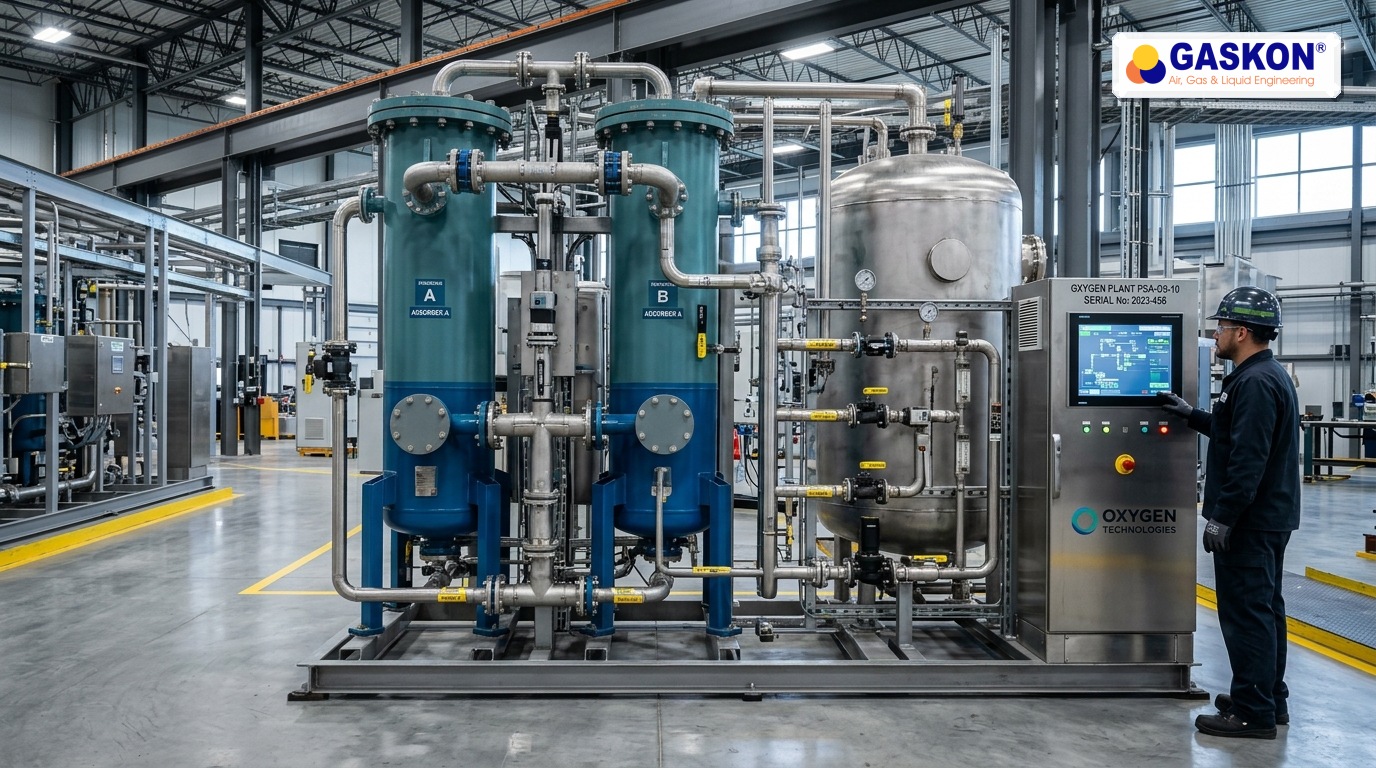
Oxygen generators commonly use Pressure Swing Adsorption (PSA) technology. In a PSA system, compressed and treated air passes through adsorbent material that selectively retains nitrogen. The oxygen-enriched gas continues through the system as product oxygen.
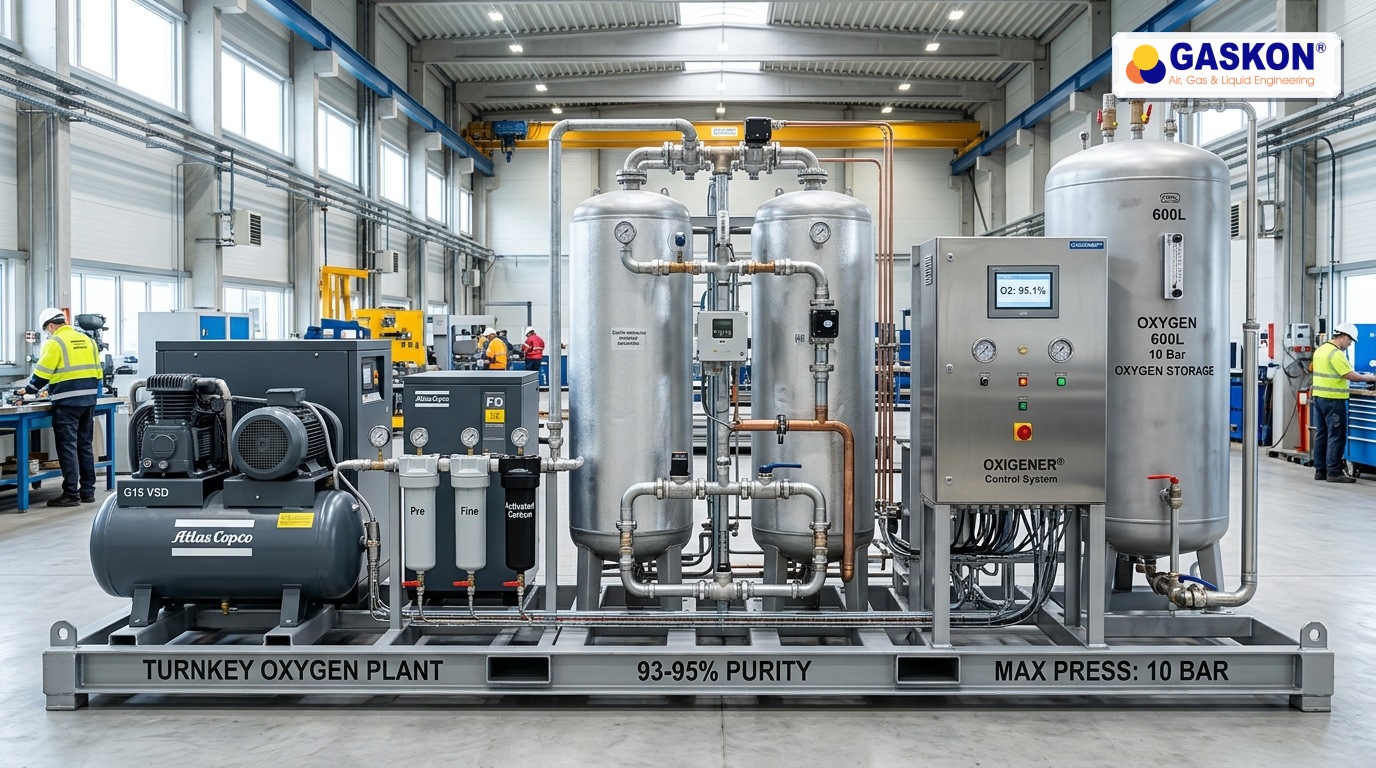
The final system configuration depends on the selected model and project requirements. It may include air compression, air treatment, oxygen generation, product storage, controls, and connections to the customer’s process.
Zeolite Molecular Sieve (ZMS)
Adsorbs nitrogen and carbon dioxide under pressure, yielding dry, oxygen-enriched stream.
What may be included in the system
A project-specific industrial oxygen system is engineered as a robust, turnkey package tailored to site utilities and process piping.
Air Compressor
Air compressor or direct connection to an existing industrial compressed-air utility.
Air Receiver & Moisture Separator
Dampens cyclical air demands and eliminates bulk condensate from the feed line.
Air Filters and Dryer
Coalescing particulate filtration and refrigeration drying to protect zeolite molecular sieves.
Oxygen Generator
Twin adsorption columns packed with premium zeolite for continuous nitrogen retention.
Oxygen Storage / Buffer Tank
Receives product oxygen and stabilizes line pressure for downstream process consumption.
Controls & Oxygen Monitoring
Automated PLC controller with touchscreen display and continuous oxygen purity analyzer.
Product-Gas Piping & Connections
Oxygen-cleaned stainless steel valves, back-pressure regulators, and process tie-ins.
Custom Engineering Scope
The exact equipment package and supply scope should be confirmed for each project.
Applications for industrial oxygen
Industrial oxygen may be used in a range of process applications, depending on the required quality and system design. The intended use should be clearly stated when assessing a system, since process requirements and oxygen specifications differ.
Manufacturing & Production
Enrichment in industrial furnaces, thermal oxidation, petrochemical syntheses, and chemical reactors requiring controlled oxygen atmospheres.
Glass Processing
Oxy-fuel combustion boosting furnace temperatures, lowering NOx emissions, and enhancing glass melting clarity and thermal efficiency.
Metal Processing
Oxy-acetylene/oxy-gas cutting, welding, brazing, electric arc furnace (EAF) decarburization, and non-ferrous metal smelting.
Water & Wastewater Treatment
Pure feed gas for ozone generators, dissolved oxygen enrichment in biological aeration basins, and industrial odor abatement.
Chemical & Process Industries
Controlled oxidation reactions, ethylene oxide manufacturing, titanium dioxide pigment production, and hazardous waste incineration.
Aquaculture & Pulp/Paper
Intensive fish farming oxygenation, pulp delignification, bleaching processes, and gold leaching in mining operations.
Define the operating requirements first
A successful installation begins by reviewing your specific process conditions and site constraints with our technical engineering team.
Oxygen Application & Process
Detail the exact downstream process (combustion, chemical synthesis, wastewater aeration, or metallurgy).
Average & Peak Oxygen Demand
Define base flow requirements and potential peak surge demands (Nm³/hr or SCFM).
Required Oxygen Quality
Specify oxygen purity tolerance (typically 90% to 95% for industrial combustion and treatment).
Required Delivery Pressure
Target line pressure required at process consumption manifolds (bar(g) or psi).
Operating Hours & Variation
24/7 continuous duty, multi-shift production, or intermittent batch cycles.
Power & Air Utilities
Available electrical supply (voltage/frequency) and existing plant compressed air capacity.
Site Temperature & Space
Ambient indoor/outdoor temperatures, building ventilation, and available installation footprint.
Storage & Distribution
Determining buffer tank sizing for uninterrupted supply during peak process drawdowns.
Industry & Site Standards
Applicable electrical enclosures (IP/NEMA), hazardous area classifications, and plant safety codes.
An oxygen supply option for industrial facilities
Where the process and site conditions support it, on-site oxygen generation may provide an alternative to delivered oxygen.
The right configuration depends on actual demand, operating profile, utility availability, storage, and the overall project economics. A project assessment can help you understand whether on-site generation is suitable for your facility.
Substantial Cost Reduction
Dramatically reduces recurring expenditure on commercial liquid oxygen (LOX) deliveries, cylinder rentals, and transport surcharges.
Independence from Deliveries
Shields manufacturing from road transport delays, regional gas shortages, and cryogenic tank evaporation losses.
Enhanced Facility Safety
Eliminates handling of heavy high-pressure gas cylinders and hazardous cryogenic liquids on your plant floor.
On-Demand Production Control
The system starts and stops automatically in response to consumption demand, delivering maximum energy efficiency.
Frequently Asked Questions
Answers to common engineering questions on industrial oxygen generation, feed-air prep, purity, and sizing.
What is an industrial oxygen generator?
How do I choose the right oxygen generator capacity?
What oxygen purity can an industrial oxygen generator produce?
Does an oxygen generator need compressed air?
Is air treatment required before oxygen generation?
Can an industrial oxygen generator run continuously?
Can the oxygen generator supply an existing process line?
Do I need an oxygen storage tank?
What maintenance does an industrial oxygen generator require?
What information should I provide for an oxygen system quotation?
Discuss an Industrial Oxygen Project
Tell us how oxygen will be used in your process and share the capacity, quality, pressure, and operating requirements you know. Our team can discuss the information needed to assess a suitable system.
* Confirm the available oxygen quality, capacity, pressure, included equipment, and maintenance requirements against the specific Gaskon models before publishing. Medical oxygen requirements are different and should be covered on the separate Medical Oxygen page.