Biogas Upgrading Systems
Biogas Upgrading Technologies for Your Process
Gaskon Engineers offers six technologies for biogas upgrading: PSA, VSA/VPSA, pressurized water scrubbing, amine scrubbing, membrane separation, and cryogenic separation.
The right system depends on your feed gas, required product-gas quality, operating conditions, and intended application. Share your project requirements with our team to discuss the technologies that may suit your process.
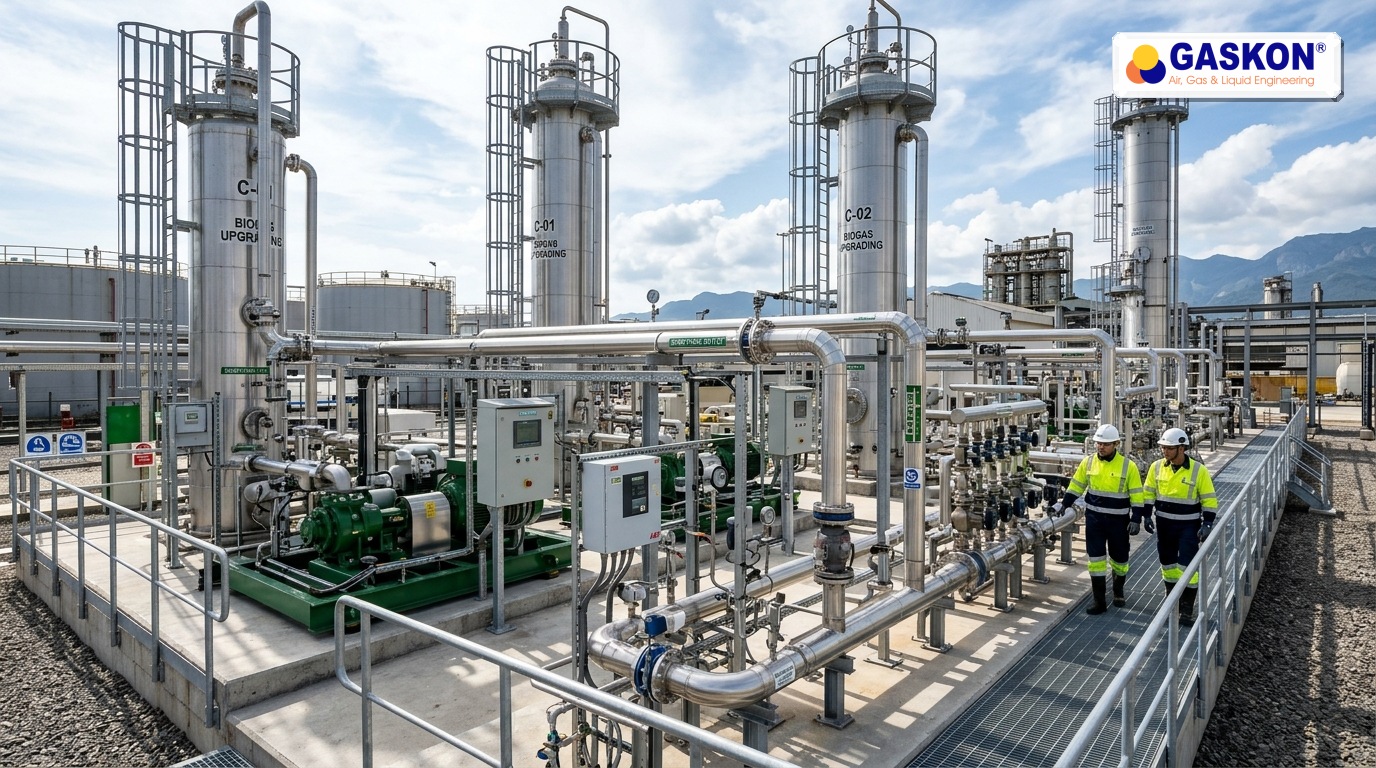
Prepare biogas for its intended use
Biogas is produced from organic material under anaerobic conditions. Its composition can include methane, carbon dioxide, water vapour, hydrogen sulfide, and other trace components. The exact composition varies with the source and operating conditions.
Biogas upgrading is the process of treating the gas to meet the quality requirements of its intended use. Depending on the project, this may involve separating carbon dioxide and managing moisture or other contaminants. The required product specification depends on how the gas will be used and the applicable requirements for that use.
The Upgrading Transformation
1. Raw Biogas Feed
CH₄ (50–65%), CO₂ (35–45%), H₂O, H₂S, siloxanes & trace impurities from anaerobic digesters.
2. Conditioning & Upgrading
H₂S removal, moisture drying, followed by CO₂ separation via PSA, VSA, Scrubbing, Membrane, or Cryogenics.
3. High-Quality Biomethane (RNG / CBG)
Enriched CH₄ (>96–99%), compliant with pipeline injection, vehicle fuel (CBG), or high-efficiency energy systems.
Choose a process around your feed gas and project needs
Each upgrading technology works differently. A project assessment should consider feed-gas composition and flow, target gas quality, utilities, operating conditions, site constraints, and the required treatment steps.
Pressure Swing Adsorption (PSA)
PSA uses adsorbent material to retain selected gas components under pressure. The adsorbent is regenerated through pressure changes, allowing the process to repeat in cycles. A PSA system should be evaluated against the feed-gas composition, desired product quality, operating pressure, flow rate, and pretreatment requirements.
Vacuum Swing Adsorption (VSA/VPSA)
VSA and VPSA systems use adsorbent materials and pressure changes to separate gas components. Their process cycles include vacuum regeneration, pressure changes, or a combination of both, depending on the system design. Technology selection depends on the feed gas, project output requirements, site utilities, and operating profile.
Pressurized Water Scrubbing (PWS)
Pressurized water scrubbing brings biogas into contact with water under controlled process conditions. Selected components transfer from the gas into the liquid, and the system manages the treated gas and water streams. Water availability, water treatment or recirculation, operating pressure, feed-gas quality, and project requirements should be considered during assessment.
Amine Scrubbing
Amine scrubbing uses a chemical solvent to absorb selected components from the biogas. The solvent is then regenerated for reuse as part of the process. The system should be reviewed against the feed-gas composition, solvent and heat requirements, pretreatment needs, operating conditions, and the required product-gas specification.
Membrane Separation
Membrane separation uses selective permeation to separate gas components. Depending on the membrane and process configuration, different components pass through the membrane at different rates. System design depends on feed-gas conditions, required output, flow and pressure, pretreatment, and the number of separation stages.
Cryogenic Separation
Cryogenic separation uses low-temperature processing to separate gas components based on their physical properties. It may be considered when the project conditions and intended output support a low-temperature process. Feed-gas preparation, product requirements, energy and utility needs, and downstream handling should all be reviewed during project planning.
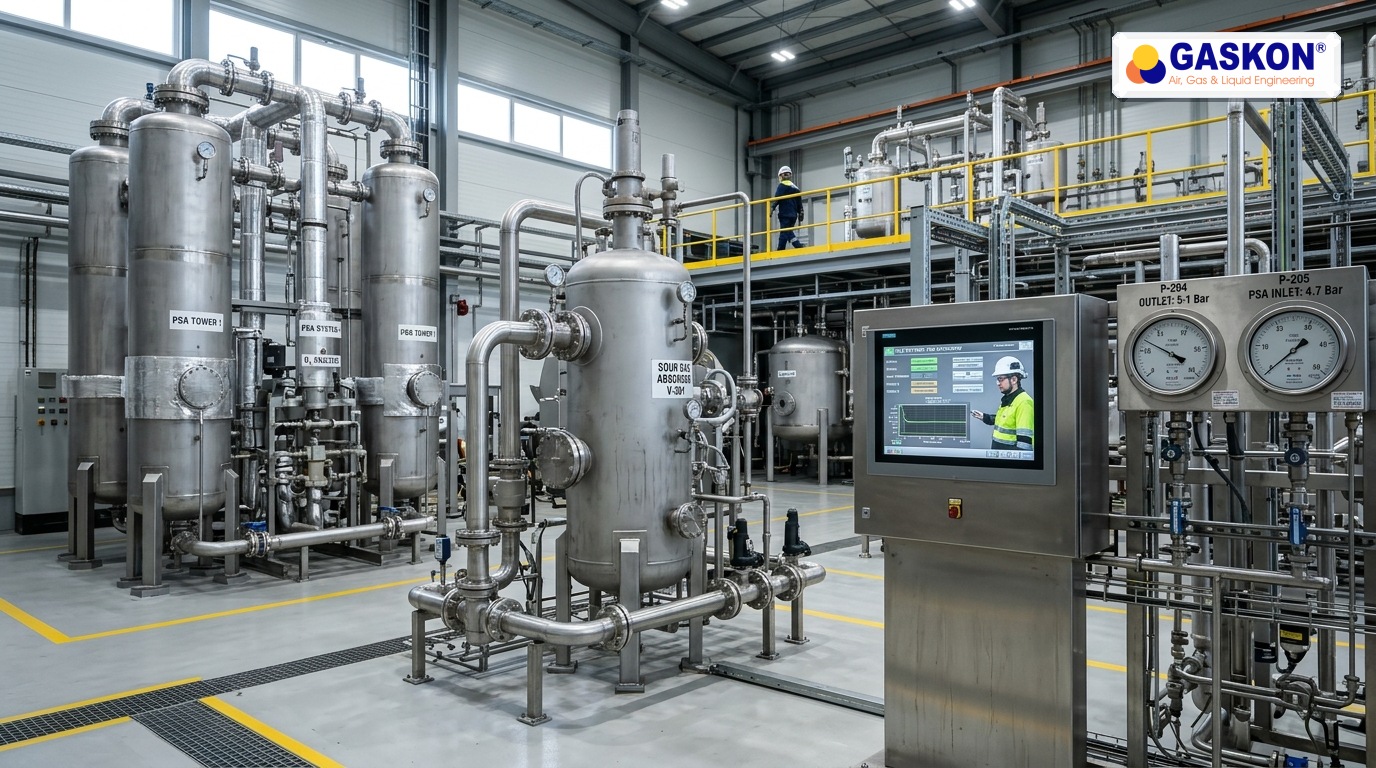
Biogas Processing System With Gas Treatment Vessels
Multi-stage purification columns and automated process monitoring.
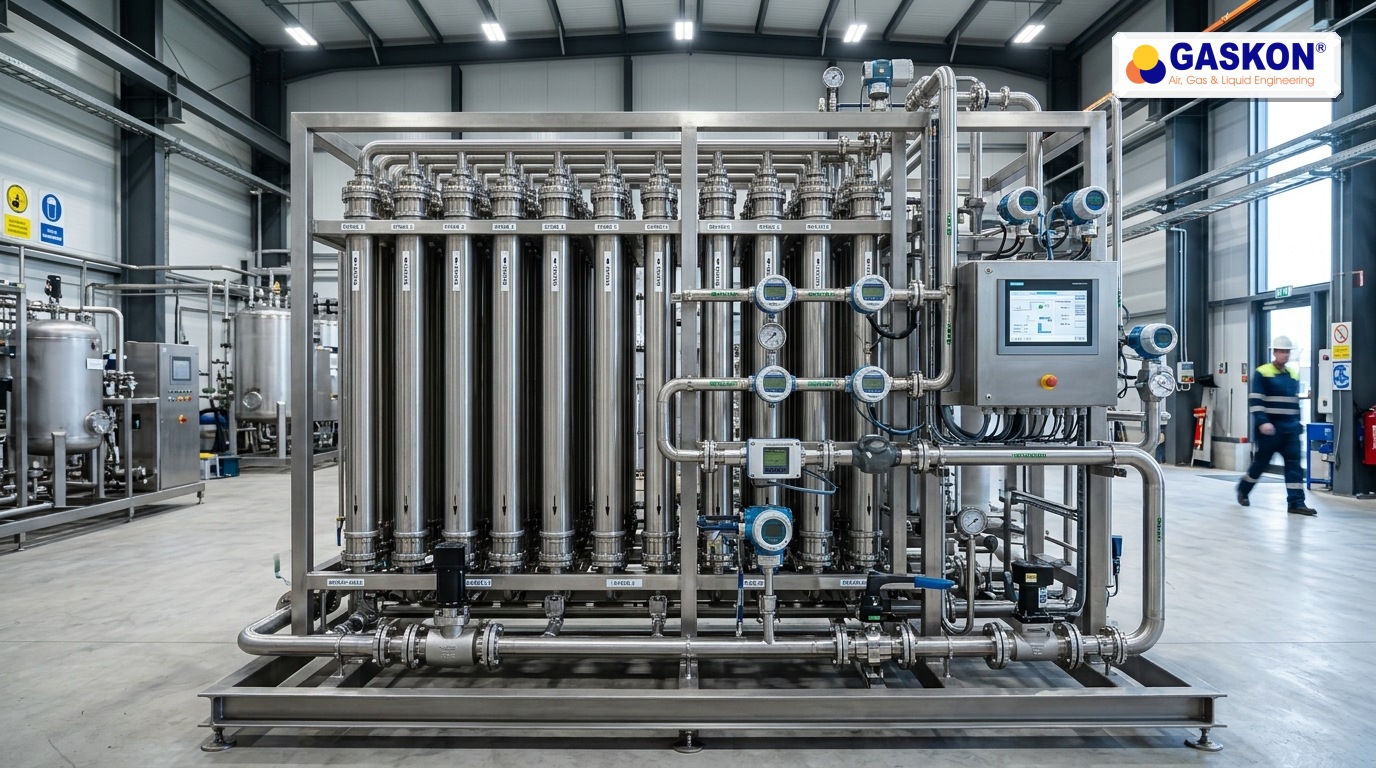
Membrane Separation Equipment For Biogas Upgrading
High-selectivity modular separation skids engineered for demanding throughputs.
Start with the process requirements
There is no single upgrading technology that is right for every biogas project. The first step is to define the gas coming into the system and the gas required at the outlet.
Feed-Gas Composition
Methane, carbon dioxide, moisture, hydrogen sulfide, and other measured components.
Flow and Variation
Average flow, peak flow, and variations over operational and seasonal cycles.
Product-Gas Requirements
Composition, quality, pressure, and the specific requirements of the intended use.
Pretreatment Needs
Treatment required before upgrading, such as moisture drying and desulfurization.
Utilities & Site Conditions
Power, water, available plot space, ambient temperature, and connection points.
Operating Profile
Expected hours of operation, duty cycle, and planned maintenance accessibility.
Project Scope
Equipment, engineering, installation, commissioning, and downstream system integration.
Quality & Regulatory Standards: For gas intended for pipeline injection, vehicle fuel (CBG), or another regulated use, the required gas specification depends on the relevant network, market, and local regulations. Treatment requirements and gas-quality limits vary by end use and project location.
A practical starting point for your project
We guide you from initial feed-gas evaluation to complete skid engineering and commissioning.
Tell us about the biogas source
Share where the gas comes from and provide a recent gas analysis if available.
Describe the intended use
Let us know how the upgraded gas will be used and what product-gas requirements apply.
Share flow & operating details
Provide expected flow, variation in supply, operating schedule, and any known pressure requirements.
Review technology options
We discuss which of the six listed technologies may be relevant to the project information provided.
Define the project scope
Confirm equipment, pretreatment, engineering, site work, commissioning, and responsibilities.
Biogas upgrading for different end uses
Upgraded biogas may be considered for different uses, depending on its final quality and the applicable requirements. Potential project pathways include fuel use, energy generation, thermal applications, or connection to a gas network where permitted and where specifications are met.
The destination for the gas should be identified early in the project because it affects the required quality, pressure, treatment, and downstream equipment.
Vehicle Fuel (CBG / Bio-CNG)
High-purity biomethane compressed to 200–250 bar for transportation fuel, automotive fueling stations, and fleet operations.
Natural Gas Grid Injection
Biomethane conditioned to match local pipeline specifications, Wobbe index, and calorific value for distribution network injection.
Power & Energy Generation
Reliable fuel for combined heat and power (CHP) units, microturbines, and continuous high-efficiency electricity generation.
Industrial Thermal Systems
Direct substitution of fossil natural gas in industrial boilers, furnaces, dryers, and process heating systems.
Frequently Asked Questions
Everything you need to know about biogas upgrading processes, technologies, and project assessment.
What is biogas upgrading?
What technologies does Gaskon offer for biogas upgrading?
How do I choose the right biogas upgrading technology?
What information is needed to assess a biogas project?
Does raw biogas need pretreatment?
What is the difference between PSA and membrane separation?
How does pressurized water scrubbing work?
How does amine scrubbing work?
Can the same system handle changes in biogas flow or composition?
What should I provide to request a quotation?
Planning a Biogas Upgrading Project?
Tell us about your feed gas, intended use, and project requirements. Gaskon Engineers can help you begin a discussion about the technologies and information relevant to your application.